Showing posts with label Polish food. Show all posts

Friday, April 3, 2015

Celebrating Easter after a long, gray Polish winter is a wonderful way to harken spring.

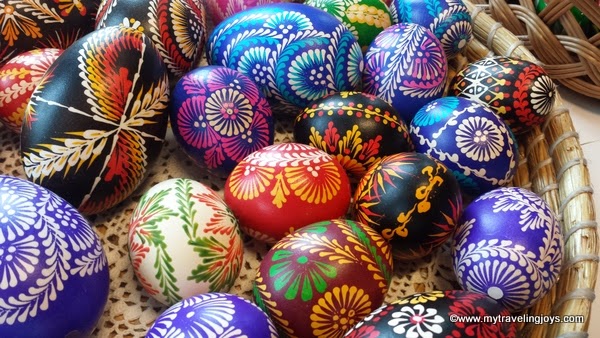
Luckily, I have witnessed three Easter seasons here in Warsaw. I absolutely love the colorful pisanki (painted eggs) that are sold at small shops and special Easter markets. Now, I have a collection of both wooden and real eggs that will always remind me of our expat years living in Poland. Many of the egg vendors sell these special eggs at my favorite market, Hala Mirowska.

Last year, we watched one of the most celebrated Polish Easter traditions in Warsaw’s Old Town. On the Saturday before Easter Sunday, Poles flock to their local churches, carrying decorative baskets filled with special items to be blessed. The Swieconka tradition means the baskets are lined with a white linen or lace towel and contain eggs, kiebasa, salt, candles, cheese or butter shaped like lambs and more. Each item represents something in the Christian faith.  To see a diagram of Easter basket items and the symbolism, click here.
This year, I made this Easter basket filled with chocolates, salt, cheese, kielbasa, horseradish and other sweets for a Polish friend.
At the church, the priest then sprinkles the individual baskets with Holy Water and gives his blessing in front a crowd. It was cute to watch the young children who are dressed up in their white Easter Sunday dresses or button-down shirts and pants. If you visit Poland during the Easter season, I definitely recommend finding a church to observe this tradition.
Bread shaped like lambs for Easter.
Some of the specialty shops sell the traditional Polish Easter baskets.
Or homemade Polish cheese in the shape of lambs and chickens.
On Palm Sunday, which takes place the weekend before Easter, you’ll find local vendors and even older Polish ladies selling decorative “palms.” Since Poland doesn’t have palm trees, the locals make these palms from dried wheat and flowers, fresh greenery and pussy willow (bazia) branches.   

Then, since many Poles fast during the 40 days of Lent before Easter, the feasting begins in earnest on Easter Sunday. During the week before this, the grocery stores and markets are a frenzy of kielbasa-pork-sweets purchases! Last year, I made Polish zurek soup, which is one of my favorites, for the first time at home. The soup is made from a fermented rye flour base and contains kielbasa and hard-boiled eggs. This article describes in detail the Polish Easter foods and includes some recipes.                                                                                                                                                                                                                                       
We may not be Polish, but we’ve enjoyed seeing the different Polish Easter traditions here in Warsaw.

Happy Easter and Smacznego! 

My Traveling Joys

Tuesday, April 29, 2014

Day Trip from Warsaw

If you’re looking for a fantastic weekend get-away in a small, historic town, then head to Kazimierz Dolny, about 2 hours southeast of WarsawKazimierz Dolny, or simply “Kazik” in Polish, is located along the Vistula River and offers something for everyone – spa hotels, a historic square, castle ruins, old churches and more.

In February, we spent three days exploring Kazimierz Dolny, which dates back to the 11th century. Around 1181, Polish King Casimir the Just gave several villages, including the former Wietrzna Góra (Windy Hill) to a convent of nuns based near Krakow. The grateful nuns changed the name of Wietrzna Góra to Kazimierz, which prospered over the next couple of centuries because of its prime river location. At the beginning of the 14th century, Kazimierz was returned to the then king, Casimir the Great, who formally founded the town.

Today, this picturesque town is known as an art center of Poland and you’ll find dozens of art galleries here.

10 Things to Do in Kazimierz Dolny, Poland:

1. The Historic Rynek.
Stroll around the cobblestone streets surrounding the Rynek (old market) and the Small Rynek. On the weekend, we even perused a flea market set up here. Stop by the historic “wishing well” in the middle of the square.
Left: the main Rynek with horse-drawn carriage rides. Right: the Small Rynek.
2. Explore the Castle Ruins.
Originally built in 1341 as a stronghold against the Tartars, the castle was extended in the 16th century and embellished during the Renaissance. The castle fell into ruin after its partial destruction by the Swedes’ invasion and was abandoned in 1774. Climb up the watchtower for pleasant views over the city!
Unfortunately, the castle walls are all that remain here.

View from the castle's watchtower in Kazimierz Dolny. 
3. Climb up the Hill of Three Crosses (Gora Trzech Krzyzy).
This hill offers fantastic panoramic views of Kazimierz Dolny and the countryside. Bring your hiking shoes as the muddy hill is a steep and slippery climb in the spring, but the views are worth it! Legend says the hill is a memorial to the victims of the cholera plague, which decimated the town’s population in 1708. Meanwhile, some historians believe that the site was referred to as “cross mountain” long before the cholera epidemic.
The Hill of Three Crosses (Gora Trzech Krzyzy).
A rare photo of  hubby and I together on vacation.
4. Visit the Old Churches.

In particular, stop by the 16th century Reformed Franciscan Church on the nearby hill. The Franciscan brethren were compelled to leave the church twice in history: first between 1866 and 1928 when the tsar ordered the annulment of the order and later under the Nazi occupation. Location: ul. Cmentarna.
The Franciscan Monastery and the attached Annunciation of the Blessed Virgin Mary Sanctuary.
5. Visit “The Wailing Wall.”
About a 20-minute walk from the Rynek, you’ll find a wall made from the recovered Jewish tombstones shattered by the Nazis and that details the tragedy of the Polish Jews. Behind the wall in the former Jewish Cemetery, you’ll also find several tombstones.
 
6. Buy Some Art!
For such a small town, there are dozens of art galleries. You’ll find many paintings of Kazik’s old buildings as well as still lifes, some modern art and handmade jewelry. Check out ul. Lubelska, and in particular, Grabski Gallery, where I bought a funky pair of silver earrings.
7. Eat a Rooster!
Simply follow your nose to the delicious bakery of Piekarnia Sarzyńskiul. Nadrzeczna 6, and try one of its trademark bread-dough roosters or one of the other homemade pastries.
8. Visit Nearby Nałeczow.
If you have time, visit nearby Nałeczow – a charming, little spa town located about 23 km from Kazimierz. Take a stroll or soak in a mineral bath in Park Zdrojowy (Springs Park). You’ll also find some beautiful, historic wooden villas along the main street.
 Ice fishing in February in Park Zdrojowy.
Some of the sculptures you'll find in Park Zdrojowy.
9. Go Hiking!
There are a couple of hiking trails and gorges located around Kazimierz. Though we had difficulty locating them, we went hiking by one of the gorges not too far from the Wailing Wall.
The last of the snow in February by Kazimierz Dolny. 
10. Stay in a Spa Hotel.
We stayed two nights at Hotel Krol Kazimierz, just a 15-minute stroll from the Rynek, as part of the hotel’s special Valentine’s Day weekend spa package. Our hotel room was very clean and comfortable. The spa area featured dry and steam saunas, a swimming pool and a multitude of spa services, which we fully enjoyed. The spa employees were friendly and most spoke English well. The breakfast buffet offered a nice selection too.
A romantic weekend away in Kazimierz.
Whether you’re looking for a daytrip or a weekend get-away, Kazimierz Dolny offers plenty to do for both options.

Recommended Restaurants:
  • For Jewish and traditional Polish cuisine, try U Fryzjera, Witkiewicza 2. It’s located in a former barbershop and decorated with photos from the 1920s. They serve some of the best Ruskie Pierogies I’ve ever eaten. 
  • Zielona TawernaNadwiślańska 4, serves Polish food and daily specials in a quaint setting with a garden and antique furniture. 
  • For good food and a nice ambiance for dinner, try Kwadrans, Sadowa 7a. There’s a real fireplace functioning during the colder months.


You'll find a variety of Polish and non-Polish dishes at the restaurants here.


Friday, March 7, 2014

There’s a whole lot more to Polish cuisine than pierogies and very cheap vodka shots.

If you want to go beyond those staples in Poland, you might want to try - chleb ze smalcem (bread with rendered bacon fat – one of my favs), schabowy  (fried pork cutlets), barszcz (beetroot soup) as well śledź z jabłkami (salted herring with apples) and herbal or potato vodkas.

And the best way to sample these Polish specialties is on a food tour with a local! This past year, while living as an expat in Warsaw, I’ve done two separate Food and Vodka Tours with the friendly folks at Eat Warsaw. I was introduced to one of our guides, Michał, through Eastern Station Warsaw, which organizes cultural tours for our local expat group. These 3-to-4-hour tours are a fantastic introduction to Warsaw – whether you are a tourist or an expat like myself!

During the summer, I joined two other Americans with our energetic guide, Magda, a local food blogger at Crust and Dust, for the Eat Warsaw Food Tour. Even though I’d been living in Warsaw for a couple months by then, Magda introduced me to Polish food I hadn’t tried yet like all kinds of varieties of śledź (herring), which is not my favorite.

Sadly, I simply dislike smoked, cured, salted and pickled fishes – from any country.
The herring dish served in a tangy mustard sauce was the best for me!
But I do enjoy anything with pork, and the Poles do a superb job with that! On the tour, we sampled traditional cured meats, bacon-wrapped prunes, fried pork cutlets with Polish coleslaw and mashed potatoes and smalec, which I affectionately refer to as bacon butter! Mmm! To me, smalec is the perfect bar snack washed down either with cold beer or vodka.
We ended our food tour on a sweet note with a slice of “Wuzetka Cake” – a rich, layered chocolate cake with whipped cream and ganache at Shabby Chic in Old Town. This tasty cake is named after the Trasa W-Z – one of the arterial roads in Warsaw built in the city after World War II. So you can have a piece of history and still eat cake!
On our recent Vodka Tour with a large group of expats, Michał and his partner took us round to some of their favorite haunts from Old Town to Centrum. They filled us in on a lot of Polish history and information about vodka, which I sadly failed to remember. But I do remember how much fun we had as we sampled our Polish vodkas on our pub crawl!
Michał kindly explaining some Polish history to us outside the Presidential Palace.
The tour included six shots of very different types of Polish vodkas – rye, potato, bison grass (Zubrówka – which is one of our favorites), herbal and even hazelnut! There also were plenty of Polish nibbles on the way such as white kielbasa cooked with caramelized onions, smalec and pickles.
My favorite shot of the evening was of Zołądkowa Gorzka – an herbal infused, sweet vodka – which makes a fantastic vodka tonic! A small group of us even stayed after the tour at Gryzę i Połykam to sample some more vodka flavored with bubblegum, vanilla beans and even hot chilies! Look for the friendly Australian bartender here!

Oh, and this small pub whips up a divine steak tartare!
Don't forget to mash in the raw egg yolk which was served on the side! 
Eating and drinking around Warsaw is much more fun when you know what you’re doing!

Na zdrowie!

(Note: I paid for these two tours on my own, and I was not asked to write a blog post about the tours. However, I really enjoyed myself and want to support local businesses such as Eat Warsaw. As always, all opinions expressed here are my own.)

Wednesday, February 26, 2014

I’ve already been warned about the Polish version of Fat Tuesday! Locally known as Tłusty Czwartek (Fat Thursday), this day allows you to stuff your face with as many Polish doughnuts as you can before the fasting season of Lent begins.

Instead of parading and partying like other Catholic-observant countries do for Mardis Gras or Fat Tuesday, the Poles will queue up in long, long lines to purchase pastries from the local cukiernia (bakery). The most popular Polish pastry, particularly on Fat Thursday, are pączki – large, deep-fried doughnuts. These sugary doughnuts are typically filled with rose petal jam (or other marmalades), glazed with sugar, and then sometimes topped with candied orange peel. The pączki are very similar to our American jelly-filled doughnuts in the U.S.
You'll find a variety of the Polish doughnuts around the city!

Fat Thursday is tomorrow (February 27th), but I’ve already seen advertisements for pączki since last week here in Warsaw! I guess I’d be stocking up on sweets too if I knew I couldn’t eat them either for 40 days during Lent!
My Polish friends have warned me that many offices even have pączki eating contests – to see who can eat the most! My husband isn’t sure what to expect at his office.

According to my daily email from Warsaw Foodie, 75 percent of Poles will eat at least 3 doughnuts and 33 percent will eat as many as 5 pieces tomorrow! Now, that’s a lot of doughnuts!

One of the most popular and traditional places where Poles purchase these donuts are A. Blikle cafes, located throughout Warsaw. This year, Blikle will offer two new modern-day fillings – orange-ginger or cherry-chili. I’m honestly surprised about the chili flavor because rarely do I find anything spicy here unless I go out to a Thai restaurant.

Another Fat Thursday favorite in Poland are faworki. Nicknamed “Angel’s Wings, these thin, crispy ribbons of pastry dough are fried, and then sprinkled liberally with powdered sugar. Luckily, I’ll be learning how to make faworki at a baking class at CookUp tonight!
Crispy piles of sweet Polish faworki at A. Blikle Cafe in Warsaw.
Since this will be our first Lent and Easter season in Poland, I’m curious to see what will happen on Fat Thursday. I plan to take my camera around to some of the popular cukiernia I know in Centrum and see what the fuss is all about!

Don’t miss out on this Polish holiday! Follow along tomorrow’s pączki madness via my Instagram feed or Facebook Page.


Smacznego!

Friday, January 3, 2014

With an imposing, 14th-century gothic church nearby, horse-drawn carriages and a historical market square, I couldn’t have imagined a more perfect place for a Christmas market.

The Main Market Square, called the Rynek Glówny, in Krakow offers an impressive backdrop for a Christmas market. On Sunday, after a 3-hour train ride from Warsaw, we arrived at the market with our visiting friends. Lucky for us, the market, which traditionally starts the last week of November, stayed open until Dec. 31. this year.

I couldn’t wait to explore the market!
St. Mary's Church, re-built in the 14th century (originally built in the early 13th century), dominates Krakow's Main Market Square.
The scent of sizzling fat Polish sausages immediately hit my senses. Several busy stalls sold all kinds of delicious pork products such grilled kielbasa, various sausages, sauerkraut cooked with porky-goodness bits and a smaller form of Poland’s national dish of golonka (roasted ham hock). And dear readers, you know how much I love pork!
While the guys ordered grilled kielbasa for us, I wandered over to a stall selling Hungarian lángos (a deep-fried flat bread made of a potato-based dough)  – the same ones I had eaten at the Great Market Hall in Budapest. Later on, we were tempted not just once, but four times by the grilled oscypek, a smoky, salty sheep’s milk cheese from the Tatra mountains. This warm cheese is particularly tasty with a dollop of tangy cranberry compote.
After our bellies were full, we continued to warm up our bodies with Poland’s mulled wine, which was sold from dozens of giant barrels with medieval lettering reading: “GRZANIEC.”

Krakow’s Christmas market also offered about 40 rustic wooden stalls selling the folk art and handicraft items that were plainly missing from the markets we recently visited in Copenhagen. We found traditional  Polish pottery, embroidered tablecloths, metalwork, hand-carved spoons, Nativity scenes and bowls, stained glass Christmas ornaments, wooden swords for children, handmade candles, woolen slippers and hats and jewelry as well as gingerbread cookies from Toruń and other sweets. If you're looking for a particular folk craft or decoration, you certainly will find it here!
 
Our friends were delighted to explore this Christmas market as well as the stalls inside the historic Cloth Hall with us.
Christmas lights inside Krakow's Cloth Hall market.
When we tired of shopping, we roamed Krakow’s cobblestone streets and visited numerous beautiful churches. Did you know that Krakow trails just behind Rome with its abundances of churches per square mile? In fact, in the Middle Ages, Krakow was known as “Small Rome” for its many churches, according to our Rick Steves’ guidebook. (I’ll try to share some of my church photos soon.) 

This was our third trip to Krakow, and I’m betting it won’t be our last. Visiting this festive Christmas market certainly cinched that deal!
Cobblestone streets decorated with Christmas lights in Krakow, Poland.

Friday, December 20, 2013

Simon stopped the car in the middle of a rural road in Lower Silesia, Poland. His wife, Beata, ran out to nearby garden and returned with a handful of wild pink roses.

“That’s what my childhood smells like to me,” she told her husband as she held open her hands full of crushed rose petals. Those rose petals would be made into a classic Polish preserve of rose petal jam.

Earlier this week, I had a special opportunity to meet Beata Zatorska, a former Polish native, and her British husband, Simon Target, the authors of Rose Petal Jam: Recipes and Stories of a Summer in Poland and Sugared Orange: Recipes and Stories of a Winter in Poland. A third cookbook focusing on Spring in Poland is in the works too. The couple was visiting Warsaw and held a book signing in connection with my local expat women’s group, International Women’s Group of Warsaw, at the Wilanow Wedel Café. I, of course, signed up immediately since I love cookbooks and am trying to learn as much as I can about Polish cooking while we live here.
Polish cookbook author, Beata Zatorska, signing copies of her latest book in Warsaw on December 16. 
Zatorska wrote the two seasonal cookbooks based on her childhood memories of her grandmother and other family members in Poland as well as their own recipes. When she was 19 years old, she emigrated to Australia where she later became a family doctor and met her husband, Target. He has written and directed award-winning television documentaries and directed numerous television food shows with Australian chefs. More than 20 years later, Zatorska returned to Poland with her husband for the first time so she could finish her cookbooks and her husband could take the impressive photographs.
The front cover of the latest cookbook - Sugared Orange: Recipes & Stories from a Winter in Poland.
Rose Petal Jam: Recipes & Stories from a Summer in Poland also has been translated in German.
As I look through the cookbooks, I can’t help but be transported to Zatorska’s Poland – a childhood surrounded by loving family members and an abundance of homecooked foods based on the Polish countryside. The cookbooks, part memoir and travelogue, bring to life the food, her memories, the traditions and the seasons.
Summer produce in Poland, as shown by Target during his slideshow presentation.
The best part was being able to Zatorska and Target in person! I immediately saw how much Zatorska still loved her homeland and how her husband had fallen in love with it as well while they traveled around the countryside and returned to cities like Warsaw and Krakow. The cookbooks are lovingly put together with some beautiful photos.
Beata Zatorska, a former Polish native, and her British husband, Simon Target. Authors of two cookbooks featuring Polish cuisine.
I’ve already starting bookmarking the recipes that I would like to make such as makowiec (a traditional, sweet poppy seed roll), apple pancakes, Lidia’s roast chicken and wild mushroom dumplings. I bet you won’t be able to resist these recipes either!

If you have any interest in Polish cooking and the stories behind the food, then you’ll love these cookbooks as much as I am!


Smacznego!
I waited my turn so I could get both of my cookbooks signed by Zatorska.